Source Vintage Step Thru Cruiser Bike for Commuting
Explore 30 listings for the vintage step thru cruiser bike, featuring aluminum frames, brushless motors, and lithium batteries. Compare specifications like 26-inch wheels and 250W power to find suitable options for urban commuting, leisure riding, and short-distance transport; compare the available evidence and request quotations based on your requirements.
Key considerations
Products List


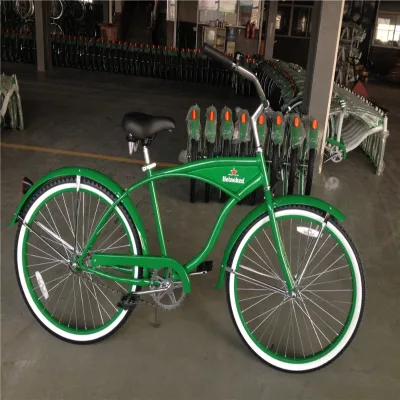
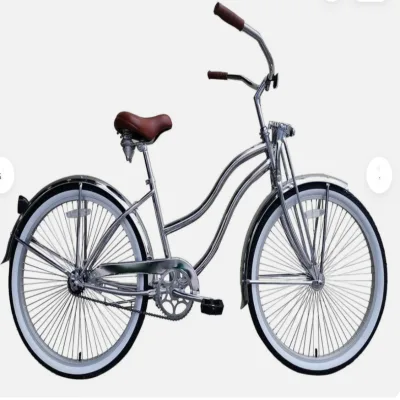


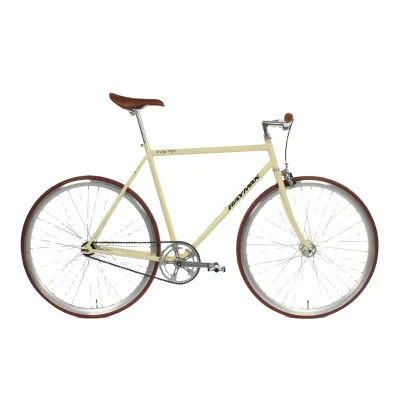


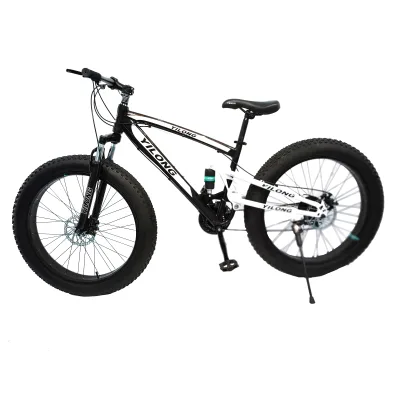
Comprehensive Sourcing Guide
Vintage Step Thru Cruiser Bike Sourcing Guide
Vintage step thru cruiser bikes combine a low-standover frame with retro styling, and they occupy a distinct niche in the bicycle and e-bike trade. Buyers sourcing this category typically face a mix of traditional pedal models and electric-assist variants, so the first purchasing decision is deciding which product definition your market requires. A classic cruiser targets leisure riders who value comfort and appearance, while an electric cruiser competes on range, motor output, and battery quality. Clarifying this positioning before issuing requests for quotation prevents mismatched samples and wasted development time.
This guide is written for importers, distributors, and retail chains evaluating suppliers of vintage step thru cruiser bikes. It walks through product scope, the technical details that must be confirmed in writing, documentation and compliance expectations, commercial cost drivers, supplier qualification, and the checks that protect repeat orders. The aim is practical: every section identifies a decision you must make and the evidence you should collect before committing to a purchase order, so that styling choices do not obscure engineering or compliance gaps that surface only after goods arrive.
Product Scope and Observed Listing Signals
Observed listings in this category span a wide commercial range. Published prices run from roughly $40 to $830 per unit, and minimum order quantities range from 1 to 400 pieces, which signals a market containing everything from small-batch specialty builds to volume-oriented models. Frame materials observed include aluminum alloy and carbon steel, wheel sizes include 26-inch and smaller 14-inch formats, and some listings are explicitly positioned as children's bikes with adjustable handlebars, adjustable seats, and coaster brakes, with a load-bearing note of over 50 kg. Electric variants appear alongside pedal models, so filter listings carefully by drivetrain type.
Geographic and packaging signals also matter to buyers. Listings reference origins such as Guangzhou and Hebei Xingtai, and packing is described as export cartons of varying thickness, with quoted packing sizes around 150 × 34 × 76 cm for full-size 26-inch models. Model naming conventions such as SYXD or JSD-series codes are used inconsistently across listings, so insist on a single bill-of-materials reference per SKU. Customization and OEM branding are widely advertised, and observed attributes such as adjustable height and customized brand labels confirm that private-label work is realistic in this category.
Technical Specifications to Verify
For electric cruiser variants, verify the full powertrain specification in writing before sampling. Observed listings describe 36V and 48V battery voltages, 200–250W and 351–500W wattage classes, brushless motors, and lithium or storage battery types, with one listing specifying Samsung cells at 10.4Ah. Range claims fall between 31–60 km per charge, charging times are quoted at 4–8 hours or 6–7 hours, and maximum speed claims span 20–40 km/h and 41–60 km/h. Each of these numbers should be confirmed against a test report, because published ranges vary with rider weight, terrain, and assist level.
For frame and component decisions, confirm material grade, geometry, and brake configuration. Aluminum alloy frames reduce weight and resist corrosion, while carbon steel frames lower cost but increase mass; ask which alloy or steel grade is actually used, not just the material family. Wheel size must match your market's expectations — 26 inches is standard for adult cruisers, while 14-inch formats serve youth products. Braking hardware ranges from front and rear disc brakes to coaster brakes on children's models, so verify brake type, tire specification such as 26 × 2.125, and load ratings against your intended rider profile.
Compliance and Safety Documentation
Certification claims in observed listings include CE and ENCE marks, so treat conformity documentation as a gating item rather than an assumption. For electric models entering the EU, CE marking should be supported by a declaration of conformity covering the applicable low-voltage and electromagnetic compatibility directives, and battery packs require their own documentation covering cell origin and transport classification. Request the actual certificate numbers and issuing bodies, then verify them independently, because a CE symbol in a listing image is not itself evidence of tested conformity.
Mechanical safety documentation deserves equal attention. Ask for frame strength and brake performance test evidence appropriate to the destination market, particularly for children's models where adjustable handlebars, seats, and coaster brakes are the primary safety features. Confirm that the battery pack carries UN38.3 transport testing documentation if lithium cells are used, since freight forwarders will require it. Buyers should also request material declarations for coatings and plastics, especially on youth products. Build a documentation checklist per SKU and make shipment release conditional on receiving the complete file, not on promises that certificates will follow.
Cost Drivers and Commercial Terms
Price dispersion from $40 to $830 reflects real differences in drivetrain, battery, frame material, and finish quality. On electric models, the battery is usually the single largest cost lever: cell brand, capacity, and voltage class move unit cost significantly, so compare quotes at identical battery specifications before judging price competitiveness. Frame material is the second lever, with aluminum alloy commanding a premium over carbon steel. Cosmetic requirements — vintage paint schemes, welded or bolted accessories, leather-look saddles, and custom decals — add tooling and per-unit cost that should be itemized separately.
Commercial terms require the same discipline. With MOQs observed from 1 to 400 units, negotiate trial-order quantities deliberately: a low MOQ often carries a higher unit price, while larger commitments may unlock customization at standard pricing. Confirm what the quoted price includes — packing type (standard versus export thick carton), palletization, and any assembly labor — because packing upgrades affect freight cost per unit. Agree payment structure, sample cost, and who owns tooling for customized branding in writing. For full-size cruisers packed at roughly 150 × 34 × 76 cm, calculate container loading early, since bulky low-value units can make freight a decisive cost component.
Supplier Qualification and Quality Control
Qualify suppliers on demonstrated capability, not listing claims. Listings advertise OEM service, customized branding, and customization availability, so test these claims with a paid sample that includes your logo and finish requirements rather than a stock photo review. Assess whether the supplier manufactures frames in-house or assembles purchased components, because vertical integration affects both quality control and the supplier's ability to accommodate design changes. Ask for factory information, production capacity, and which product families they produce regularly, then match your volume expectations to their demonstrated scale.
Quality control should be specified in the purchase contract. For assembly-heavy products like cruisers, define an inspection protocol covering frame weld quality, paint finish, wheel trueness, brake adjustment, and — on e-bike models — battery installation, controller wiring, and a powered function test on a sampled basis. Agree the acceptable quality limit levels for critical, major, and minor defects before production begins, and reserve the right to third-party pre-shipment inspection. Require that packing be verified against the agreed export carton specification, since transit damage on bicycles is a frequent complaint when carton strength is economized.
Long-Term Procurement Checks
Long-term value depends on spare parts and service continuity. Before scaling orders, confirm that the supplier can continue supplying matched components — batteries, chargers, motors, brake parts, and frame-specific fittings — for an agreed period after your last purchase order. Battery and charger models change frequently in the e-bike segment, so lock the specification of the Samsung-cell or equivalent pack in a written annex, and require notification and approval rights before any component substitution. This protects warranty performance in your market for years after shipment.
Also institutionalize a repeat-order review process. Compare each shipment's actual defect rates and customer complaints against the agreed inspection limits, and require corrective action reports when thresholds are breached. Track whether the supplier's certifications remain current and whether test reports are renewed when components change, particularly after battery or motor upgrades. Reassess landed cost annually, including any shifts in packing, freight, or material prices, and benchmark against new quotations without automatically switching suppliers. Buyers who document specifications, maintain a certificate file per SKU, and audit supplier performance season by season consistently achieve smoother reorders and fewer compliance surprises in this category.
FAQs
What is the maximum speed of these bikes?
The maximum speed ranges from 20 to 40 kilometers per hour for standard models. Some variants reach speeds between 41 and 60 kilometers per hour depending on the specific motor wattage and battery voltage configuration selected for your order.
Can I customize the frame material and design?
Yes, customization is available for frame materials including aluminum alloy and carbon steel options. You can also request custom branding and specific color variations like white to match your brand identity or target customer preferences effectively.
What certifications do these electric bikes hold?
These products hold CE and ENCE certifications ensuring compliance with relevant safety standards. The manufacturing processes adhere to established standards like 48V20A or 60V20A specifications to guarantee reliability and safety for international buyers and end users.
How long does charging take for the battery?
Charging time typically ranges from 4 to 8 hours depending on the specific battery capacity and voltage. Most units utilize lithium batteries or storage batteries that require approximately 6 to 7 hours to reach a full charge state.
What is the minimum order quantity for these bikes?
The minimum order quantity varies between 1 and 400 units based on the specific model and customization requirements. Buyers can start with small quantities for testing or place larger orders for bulk distribution to meet market demand efficiently.
Where are these bikes originally manufactured?
These bikes originate from manufacturing hubs in Guangzhou and Hebei Xingtai regions. These locations provide established supply chains for aluminum alloy frames and brushless motors ensuring consistent quality and timely delivery for international procurement needs.
What is the range per power for these models?
The running distance per charge ranges from 31 to 60 kilometers depending on usage conditions. Higher wattage motors and larger battery capacities like 10.4ah Samsung cells enable longer distances up to 60km for extended commuting or recreational riding.